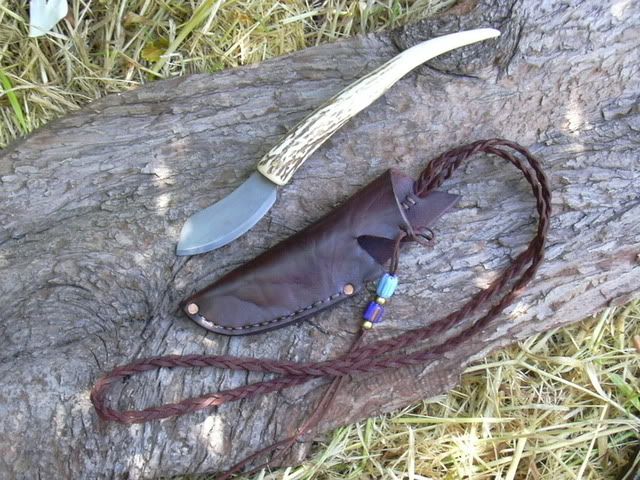
For a while now, I have been interested in the tool of the Native American people, the Mocotaugan or couteau croche, the crooked knife. It seems to be such a versatile tool. I am a little surprised that few people involved in Buschcraft seem to have an interest in it. To satisfy my own curiosity, I started to make s few of these tools.
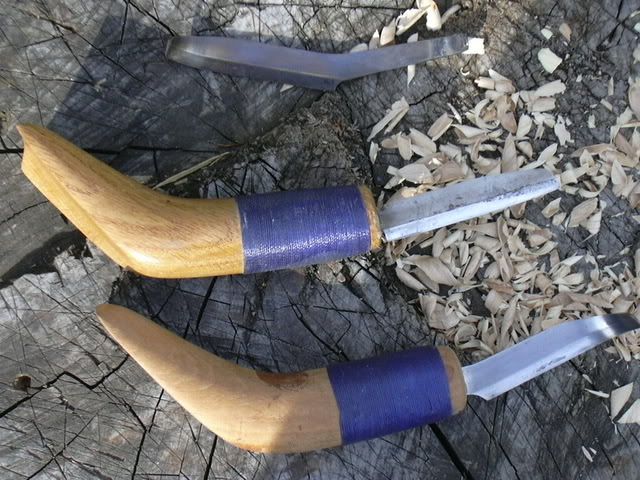
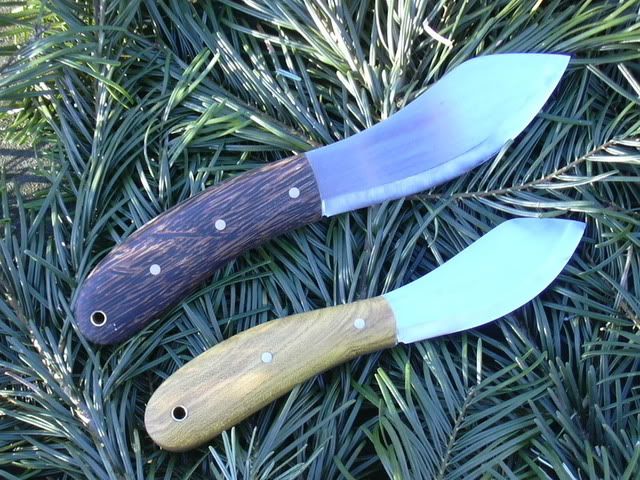
The top knife on the picture has a straight blade. I quickly discovered it's quite uncomfortable to use because it put the hand and wrist in the wrong position. The second one has the blade angled back and up, with a sharp curve on the end of the blade. Better than the first one, but still not right.

This crooked knife is a better shape for my hand. The curve of the stag horn handle and the sweep back and up of the blade make it easier and less tiring to use this knife. I made a sheath from rawhide for it. The hide is very tough when dry, although easy to work when wet. I tried to make a leather sheath first for it, but it would not keep the shape and the very sharp blade kept cutting into it.
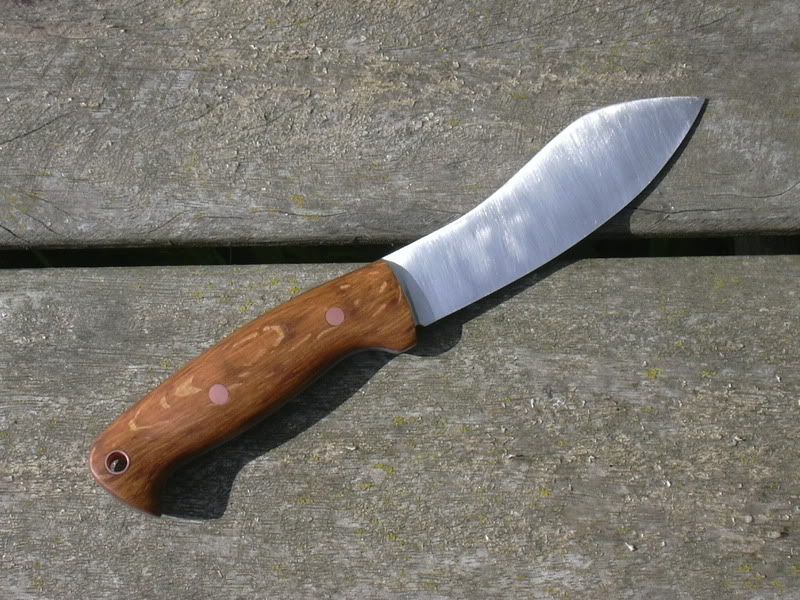
The latest has a weird looking handle. That's because it's made out of a bit of firewood, and I followed the grain to produce the handle.

Surely a more dignified use for a piece of Oak!
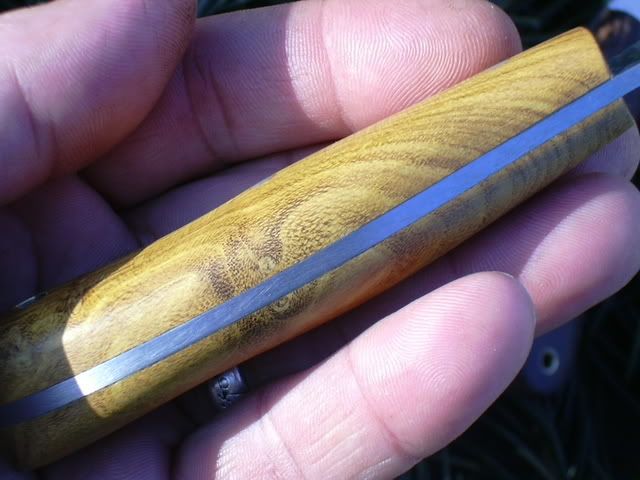
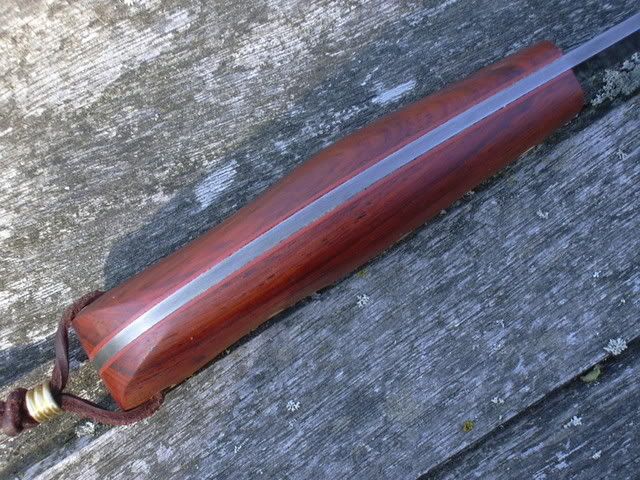
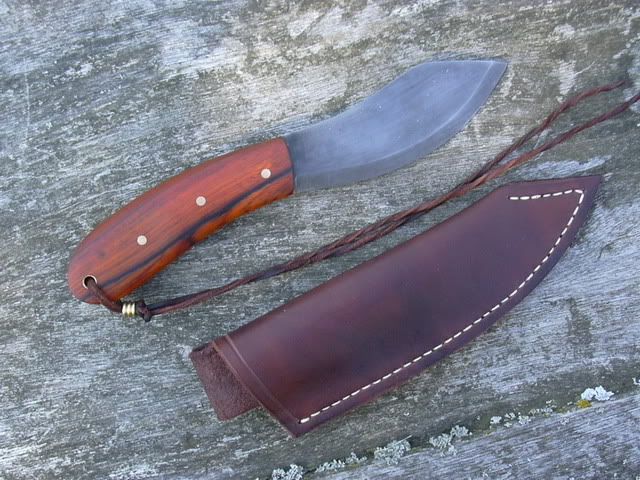
The handle should be used to angle the blade and produce an angle of more than 90 degrees to the forearm. That makes it a lot easier and more comfy to use. The blade still has quite a pronounced curve at the tip. The blade is at the bottom of the handle, rather than in the middle, this makes it easier to work on a flat surface, such as a paddle blade.
That's a picture of a crooked knife produced from my kits.

Of course, all these are my ideas of what works as a crooked knife. It works for me, but that does not mean it's gospel!